The Rundown Newsletter
View Results
Ian Campbell | September 15, 2026
Timing 5 runners with a stopwatch is simple. Timing hundreds or thousands of runners crossing the finish line close together is a different challenge.
That’s why many 5K races use chip timing. A timing chip attached to each runner’s race bib allows the timing system to automatically record when runners cross the start, finish, and other timing points.
In this guide, we’ll explain how chip timing works for a 5K, what a race bib with a timing chip is, what equipment is needed, and when chip timing makes sense for your race.
Chip timing is a race timing system that uses an RFID timing chip attached to a runner's race bib or shoe to record when they cross the start, finish, or split points.
The basic process is simple:
This makes it much easier to manage results when many runners finish close together.
The process is straightforward:
For a crowded 5K, this allows the timing team to capture runners as they cross the finish line without relying on a stopwatch or manually recording bib numbers.
A race bib with a timing chip combines the runner’s bib number with an RFID timing chip.
The chip contains a unique identifier that connects the runner to their registration record. In many modern 5Ks, the chip is disposable and built directly into the race bib.
This means runners don't have to attach a separate device to their shoe or return a reusable chip after the race.
Bib-based timing chips make race-day timing simpler because:
For community 5Ks, charity races, school runs, and similar events, this can make race-day operations easier for both runners and volunteers.
A typical chip timing setup includes several components:
| Equipment | What It Does |
| RFID timing chip | Identifies the runner |
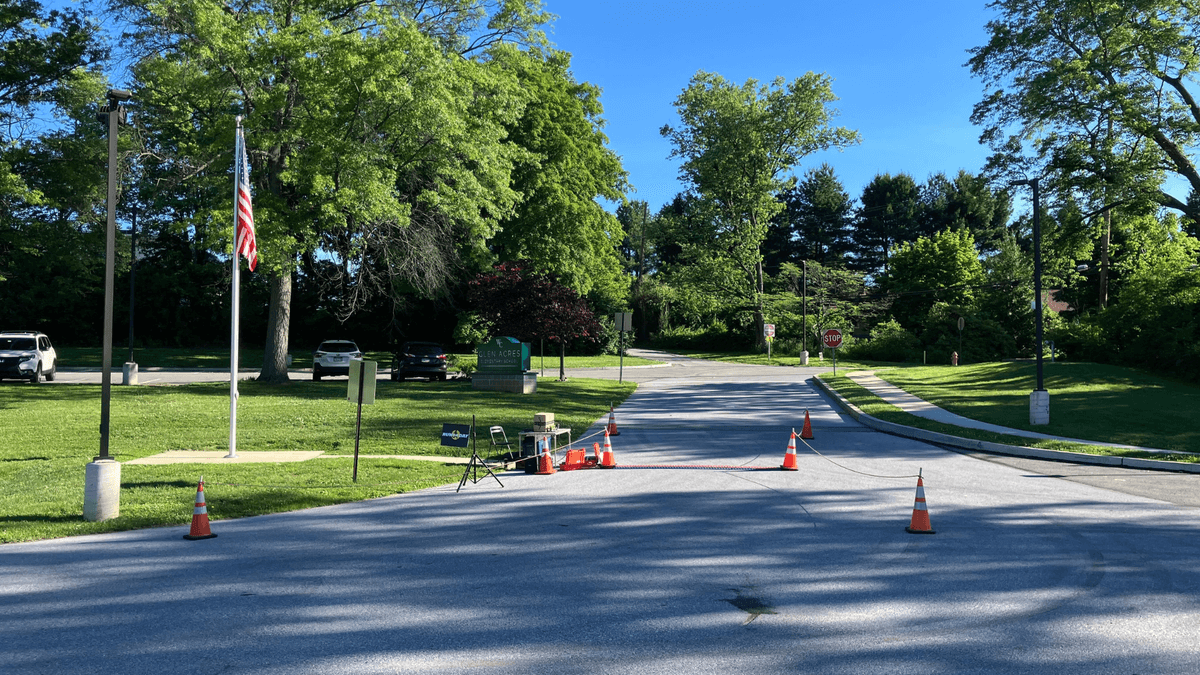
| Race timing mats/antennas | Detect chips as runners cross timing points |
| Timing system/controller | Processes timing reads |
| Timing software | Matches reads to runners and generates results |
| Backup timing | Helps verify results if an issue occurs |
The exact equipment and setup depend on the race size, course, number of timing points, and type of event.
For a closer look at the equipment used for 5K timing, see our guide to 5K race timing equipment.
A professional chip timing setup typically follows a simple workflow.
The timing team:
As runners cross the timing points, their chips are detected and their times are recorded automatically.
For races with split timing, additional timing mats can capture intermediate times along the course.
The timing software processes the recorded data and connects each timing read with the correct runner.
Results can then be reviewed, verified, and published for participants.
A backup timing method or video verification can also provide an additional layer of protection for race results.
Not every 5K needs the same timing setup.
| Factor | Manual Timing | Chip Timing |
|---|---|---|
| Small field | Good fit | Good fit |
| Large field | More difficult | Better suited |
| Finish-line congestion | Harder to manage | Designed for crowded finishes |
| Results | More manual work | Automated |
| Setup | Simple | Requires timing equipment |
| Awards/results | More processing | Faster processing |
For a small event with a limited number of runners, manual or DIY timing may be enough.
As the field grows, chip timing can make it much easier to record accurate results when many runners finish close together.
Chip timing is especially useful when:
Smaller races with fewer runners may have other options.
For example, Run The Day's DIY Race Timing option is designed for smaller events with 50–250 runners and provides a simpler alternative to professional chip timing.
Costs vary based on race size and complexity:
The cost of chip timing depends on several factors, including:
Rather than looking only at the price of the timing equipment, race organizers should consider the complete timing setup and level of support needed for race day.
For a more detailed breakdown, see How Much Does It Cost to Time a 5K Race?
Not sure whether your race needs chip timing, what equipment you'll need, or how to plan your timing setup?
Download our free 5K Race Timing Planning Checklist to compare timing methods, equipment, staffing, budget considerations, and race-day setup.
For races that need registration and professional timing together, Run The Day combines the registration data and timing process in one system.
That can help race directors avoid unnecessary spreadsheets and disconnected workflows.
Run The Day provides:
For community races, school runs, fundraisers, and other 5Ks, the goal is simple: make registration, timing, and race-day operations easier to manage.
Each runner receives a bib with a timing chip. Timing mats detect the chip as the runner crosses the start or finish, and timing software records the runner's time.
A timing chip is an RFID device used to identify a runner and record their time when they cross a timing point.
Yes. Many modern 5K races use disposable RFID timing chips built into or attached to race bibs.
A typical system uses RFID timing chips, timing mats or antennas, a timing controller, timing software, and backup timing methods.
Chip timing automatically records runners as they cross timing points and is designed to provide precise results, even when many runners finish close together.
Gun time starts when the race officially begins, while chip time measures a runner's time based on when their timing chip crosses the start and finish points. See our guide to gun time vs. chip time for a detailed explanation.
Chip timing takes much of the manual work out of recording race results.
With a timing chip, race bib, timing mats, and timing software working together, race organizers can capture runner times and produce results more efficiently.
For smaller races, manual or DIY timing may be enough. But as a 5K grows and more runners finish close together, chip timing can provide the accuracy, speed, and race-day support needed to keep results running smoothly.
If you're planning a 5K and need registration, professional timing, and race-day support, Run The Day can help manage the process from registration through results.