The Rundown Newsletter
View Results
Ian Campbell | September 11, 2026
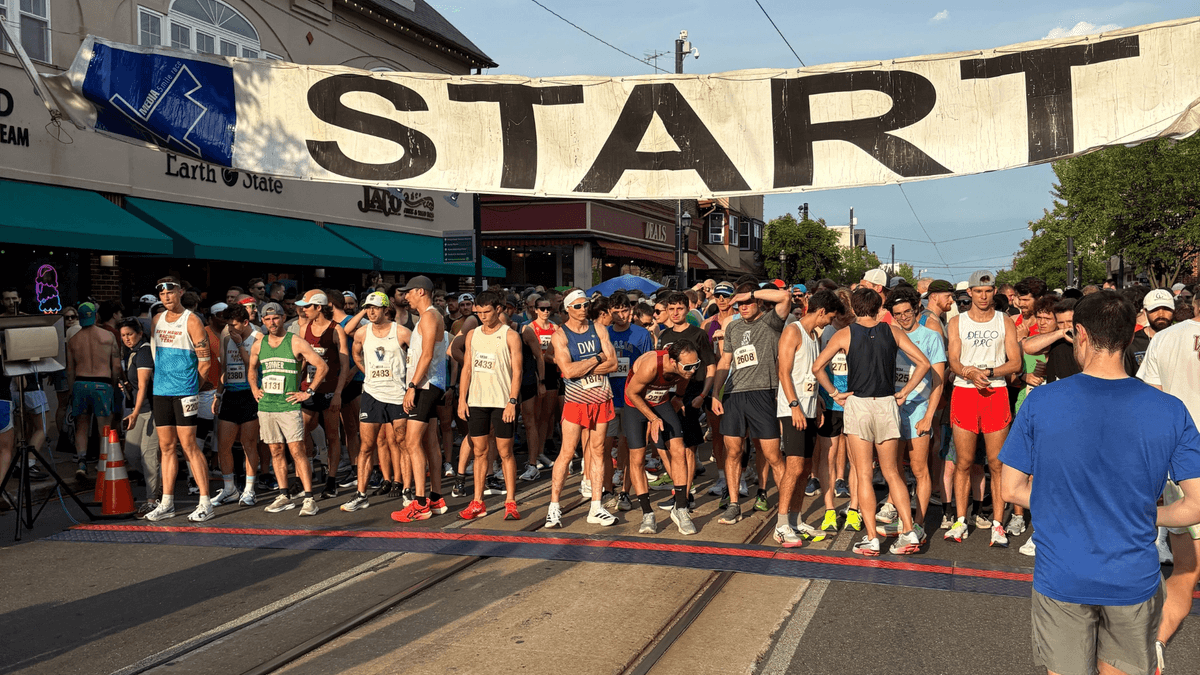
The Media 5 Mile Run has been a community tradition for 45 years, dating back to 1980.
Today, the race sells out at approximately 1,800 runners, yet it continues to be organized by a volunteer-led committee.
That creates a unique challenge: how do you manage such a popular race without a large professional event staff?
Run The Day helps the Media 5 Mile Run simplify registration and timing through a one-stop-shop approach, making it easier for the volunteer team to manage the event.
| Race | Media 5 Mile Run |
| Founded | 1980 |
| Community history | 45 years |
| Participants | Sells out at approximately 1,800 runners |
| Planning team | Volunteer-led committee |
| Run The Day support | Registration and timing |
Managing a race with 1,800 runners requires more than simply opening registration and showing up on race morning.
A volunteer-led committee has to keep participant information organized, prepare for race-day operations, and make sure timing is ready to accurately capture results.
As participation grows, these responsibilities can become more difficult to manage manually. Registration information needs to be accessible, race-day details need to stay organized, and timing needs to work alongside the participant data.
For the Media 5 Mile Run, the challenge is balancing the scale of the event with a volunteer team responsible for making race day happen.
The goal isn't to create a larger administrative operation. It's to have the right systems in place so the team can manage a large field without adding unnecessary complexity.
Run The Day supports the Media 5 Mile Run in two important areas: registration and timing.
Managing registration for a race that sells out at 1,800 runners requires organized participant information and a reliable process.
Run The Day helps the volunteer team with:
Having participant information organized in one system gives the committee a central place to manage registration as race day approaches.
Race timing is another critical part of the event.
Run The Day provides race timing support while keeping registration and timing connected. This reduces the need for the volunteer committee to coordinate separate systems and manually move information between them.
For a volunteer-led race, having registration and timing through one platform can simplify the planning process.
Instead of managing disconnected systems and coordinating multiple vendors for these essential parts of the race, the committee can work with one company for both registration software and a race day timing team.
That makes race planning easier to manage with everything else that is required to put on a successful community event.
Volunteers already have limited time to dedicate to race planning.
Race technology should reduce that workload, not create more work that the committee needs to manage.
A connected system can help organizers:
For an event with 1,800 runners, even small efficiencies can make race planning easier.
The less time volunteers spend dealing with technology, the more time they can spend making the race a great experience.
The Media 5 Mile Run demonstrates that a community race can grow significantly while maintaining its volunteer-led structure.
The event has been part of the community since 1980 and now sells out at approximately 1,800 runners.
That growth doesn't have to mean adding layers of complexity to the race committee. The right technology can support a larger number of runners while allowing the people behind the event to continue focusing on the community and the race-day experience.
For volunteer organizers, that's an important distinction: growth should make the race bigger, not unnecessarily harder to manage.
The Media 5 Mile Run provides several useful lessons for other race directors managing growing community events.
1. Choose technology that volunteers can actually use.
Race technology should be easy to use. Volunteers should be able to learn it in 30 seconds or less to be able to do their job rather than requiring technical expertise and hours of training.
2. Keep registration and timing connected.
Participant information and timing are closely connected, so keeping these systems integrated in a single software platform often reduces manual work.
3. Reduce the number of systems your team has to manage.
Every additional platform creates another process to learn and maintain.
4. Plan technology around the size of your event.
The needs of a race with 1,800 runners are different from those of a very small event. Choose systems that can support your current field and future growth.
5. Choose tools that can support growth.
A platform should continue to work as registration numbers increase rather than forcing organizers to completely change their setup.
The Media 5 Mile Run is one example of the type of community event Run The Day supports.
Run The Day is designed for 500–10,000 runner events, helping race teams manage key parts of their event through a one-stop-shop approach.
The platform supports:
For volunteer-led race teams, the goal is to provide technology that simplifies the work involved in managing a growing event without adding unnecessary complexity.
The Media 5 Mile Run shows that a race doesn't need a large professional staff to successfully manage 1,800 runners.
With the right technology and support, a volunteer-led committee can manage an event that sells out at 1,800 runners while preserving the community tradition that made the race successful in the first place.
After 45 years, the Media 5 Mile Run continues to bring the community together, and its growth shows that a volunteer-led race can scale while keeping its focus on the runners and the event itself.
Run The Day combines race registration and timing in one easy-to-use platform, helping volunteer-led race teams simplify operations as their events grow.