The Rundown Newsletter
View Results
Ian Campbell | April 6, 2026
Picking the wrong race registration platform doesn't just cost you money — it costs you something more precious, your time. Especially on race day when every second counts.
Most registration platforms look similar on the surface. They collect signups, process payments, and publish a race page. But once you get closer to race day, the differences start to show.
Whether your race is a USATF-sanctioned race on a certified course or a casual community fun run, the registration platform you choose shapes the entire race-day experience.
If you're organizing a 5K race, you need one thing above everything else: a smooth race day. The software you choose plays a big role in that.
So let's look at Run The Day and RaceEntry — two race registration platforms that take different approaches — and see which one actually fits best for your race.
Run The Day was built specifically for smaller events — local 5Ks, charity 5K registration, school fun run registration, and community events with under 5,000 participants. Philadelphia born and raised, with west coast expansion in California — specifically the Los Angeles region.
According to Running USA's participation data, the majority of road races in the U.S. have fewer than 1,000 finishers. Run The Day was built for exactly those events.
Here's what makes it different:
If you're looking to host a smooth, professional 5K with minimal hassle, Run The Day is worth a close look. It's built for the reality of local races — where your team is small, your timeline is tight, and things need to just work.
"If you are ever speaking with a school district that is on the fence about using Run The Day for their 5K fundraiser, please feel free to give them my phone number or email address. I'd be more than happy to tell them how beneficial it has been for our race." — Jessica | Read her full story →
RaceEntry is a well-established platform that serves a wide range of races, from local 5Ks to larger endurance events and multi-race series.
A few things to know:
In short, RaceEntry is a solid platform with a lot of capability. But that capability comes with more moving parts — and for many small race teams, that's more complexity than the event actually needs.
| Feature | Run The Day | RaceEntry |
| Best for | Local 5Ks, charity runs, school and community events | Multi-race series, larger events, experienced directors |
| Ease of use | Simple — minimal training needed | More complex — takes time to learn |
| Race-day integration | Registration, check-in, and timing in one system | Registration is strong; timing requires separate coordination |
| Target event size | Under 5,000 participants | Flexible — small to large events |
| Pricing | Free to organizer. 5%-7%+$1 paid by participants | Per-registration fee (4.97% + $1.25) |
| Customization | Fully customized with AI site builder | Highly customizable with more features |
| Event discovery | Dedicated SEO/GEO team with growing social media presence | Strong — participant-facing directory with reviews |
| Volunteer-friendliness | High — designed for volunteer-led events | Moderate — more training needed |
| Fundraising | Integrated donation collection with easy to create teams | Dedicated fundraising pages and teams |
This is where the two platforms feel most different in practice.
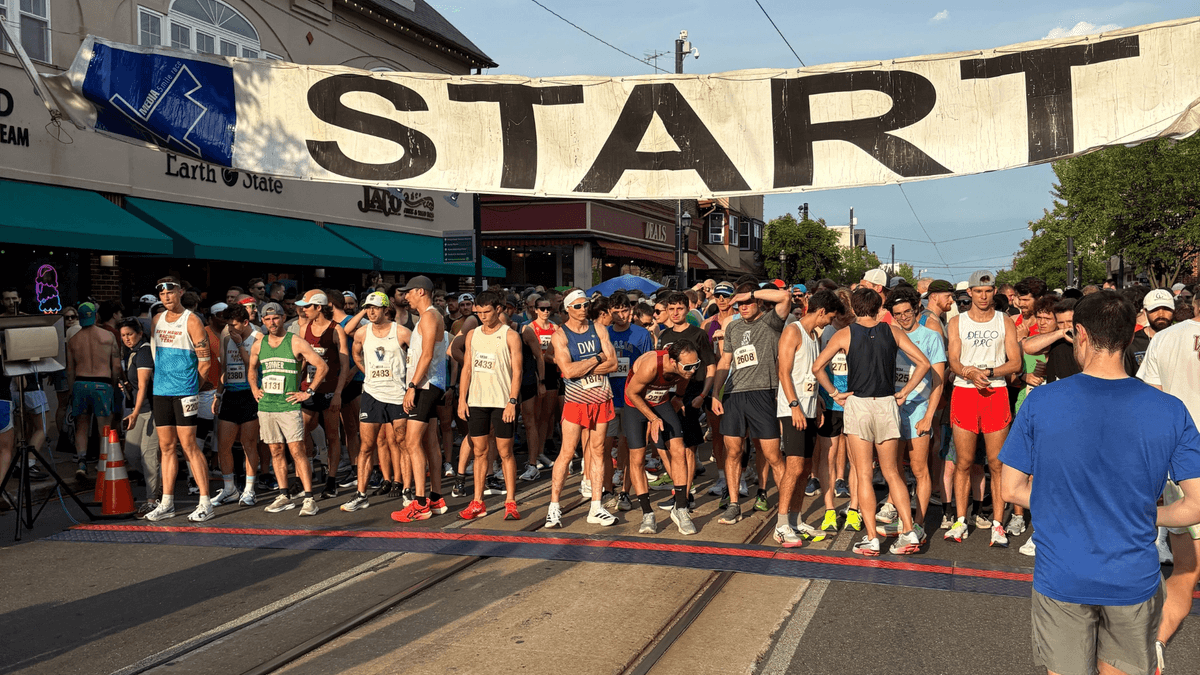
With Run The Day, the system is designed around race morning. As one of the more streamlined race registration platforms, it ensures that when someone registers, their data is already connected to check-in and timing. Your volunteers aren't toggling between tools or wondering where to find someone's bib number. For events run by small teams — which is most local 5Ks — that simplicity prevents errors and keeps the line moving.
With RaceEntry, you get more flexibility in how you configure your event. But that flexibility means more setup, more coordination between tools, and more decisions for your team to make on race day. If you have experienced staff and a complex event that needs it, the tradeoff makes sense. For a community charity run with a dozen volunteers? It's more than you need.
Want to see how check-in and timing actually work together? Walk through a sample race day in the free demo.
If you're running a local 5K, a school fun run, or a charity race, Run The Day is the platform built for your reality. The RRCA's race director resources emphasize the importance of simplifying logistics for volunteer-run events — and that's exactly what Run The Day is designed to do.
Here's why organizers keep choosing it:
Both platforms are legitimate options. The right choice depends on your event size, your team's experience, and how much complexity you actually need.
If you're managing a large endurance event with a full-time staff and multi-race logistics, RaceEntry has the features to support that.
But if you're organizing a local 5K, charity run, Turkey Trot, or school race — and you need something easy to set up, simple to run on race day, and built for smaller teams — Run The Day is worth a serious look.
Ready to see how it works? Run The Day offers a free demo so you can walk through registration, timing, and check-in before you commit. Schedule your demo here.
Q1: Which platform is better for small 5K races — Run The Day or RaceEntry?
For smaller races, Run The Day is typically the better fit. It integrates registration, check-in, and timing into a single system, which reduces complexity for volunteer-run events. RaceEntry offers more features overall, but many of them are geared toward larger or more complex events.
Q2: Does RaceEntry offer anything Run The Day doesn't?
Yes — RaceEntry has a participant-facing event directory where runners can discover and review races. It also offers more advanced customization, merchandise sales tools, and multi-race registration. If event discovery and feature depth are priorities, RaceEntry has an edge there.
Q3: Can I use Run The Day for both registration and timing?
Yes. Run The Day connects registration with timing, check-in, and results in one platform. That's one of its biggest advantages — you don't need to coordinate between separate systems on race day.
Q4: How much does each platform cost?
Run The Day's software is free for organizers. Small transaction fees (5%-7%+$1) are paid by participants. RaceEntry charges a per-registration fee of 4.97% + $1.25, which most race directors pass on to participants.
Q5: I'm a first-time race director. Which platform should I start with?
If this is your first event, Run The Day's simpler setup and integrated race-day tools will save you time and reduce the chance of things going wrong. You can always explore more complex platforms later as your events grow.
Q6: How do I find the best registration platform for my local 5K?
Start by looking at what your race actually needs. For most community 5Ks, the priority is a platform that connects registration to race-day operations — check-in, bib assignment, and timing — without requiring multiple tools. Compare 5K race registration websites based on ease of use, pricing transparency, and whether your volunteer team can realistically manage it on race morning.