The Rundown Newsletter
View Results
Ian Campbell | June 24, 2026
The London Marathon recently announced that 1.1 million runners applied to the 2026 race. A new world record. This comes on the heels of more than 56 thousand runners finishing this year’s London Marathon. Also a world record.
With the London Marathon setting attendance records and races everywhere reaching new heights, I couldn't help but wonder, how did we get here?
To understand races, let's go back to the beginning of our species. More than 10 thousand years ago, our hunter gatherer ancestors ran to survive. Instead of elaborate finish lines with fancy medals, races would result in winners who would survive and losers who would be dead meat. Literally.
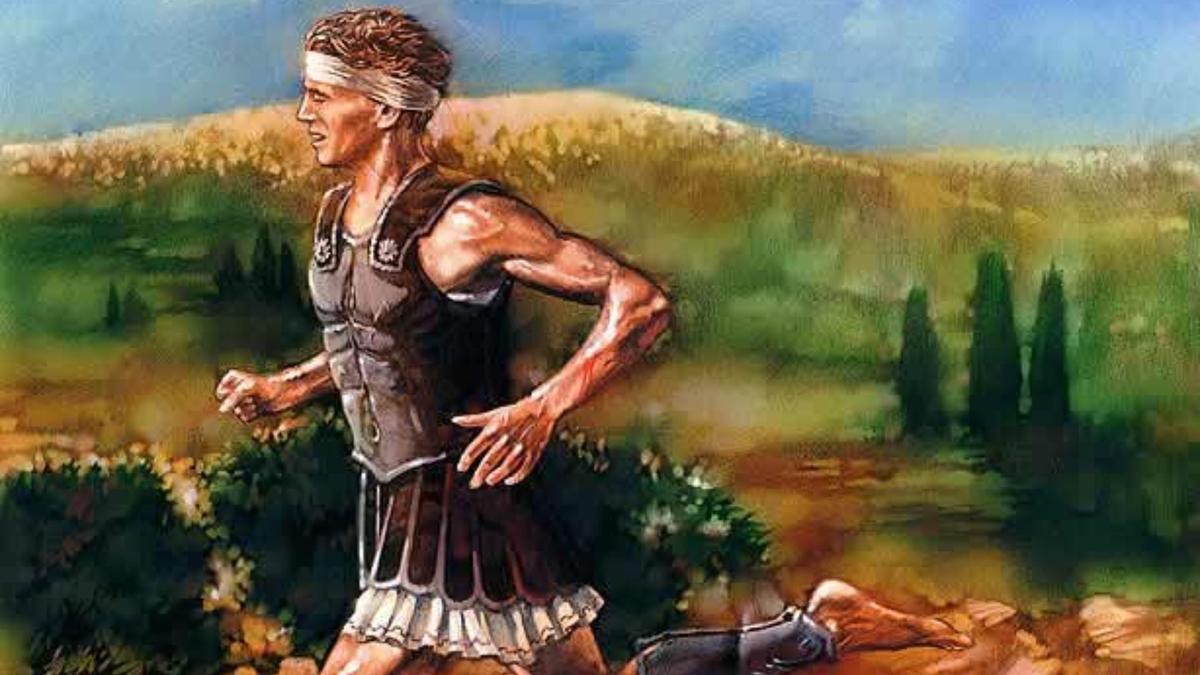
While not being eaten by a wild animal is good motivation, it is not exactly inspiring. So let's quickly fast forward to 490 B.C. when a Greek messenger ran 25 miles to announce the Greek's victory over the Persians in the Battle of Marathon.
Upon reaching his destination in Athens, the messenger shouted news of the victory before collapsing dead. Although the messenger died, the story of his heroic run would be passed down many generations to inspire the modern marathon.
Today, instead of life-or-death stakes, races are about community, health, and purpose. If you’ve ever thought about hosting one, here’s our complete guide on how to organize a 5K.
One question many new runners ask is: Why is it called a 5K?
The "K" stands for kilometer, the standard unit of distance used in most countries around the world.
A 5K race covers 5 kilometers, which equals 3.1 miles.
The distance became popular because it's long enough to be challenging but short enough for beginners to complete without months of training. Today, the 5K is one of the most common race formats used for charity runs, school events, community races, and fundraising events.
If you're new to the sport, you might also wonder exactly how many miles a 5K is and how race distances compare.
In 1896, the first modern Olympic games in Athens included a 25 mile race inspired by the Greek messenger's deadly run. The race was named the marathon and became the game’s most popular event.
The marathon’s Olympic popularity kicked off modern races in the USA with the first Turkey Trot taking place in Buffalo later that year and the first Boston Marathon taking place the following spring (1897).
The modern race era had dawned, but the popularity of races would be a slow burn. During most of the 20th century, races remained small, male-only events that were hosted by local clubs and YMCAs.
Want to learn how to host a seasonal tradition like those early Turkey Trots? Read our guide on planning the perfect Turkey Trot 5K run.
The trajectory of races would start to change in 1972. This was a transformative year for races for 2 main reasons.
If you are wondering what kind of a running boom we are talking about, I asked ChatGPT to help us understand with a visual chart.
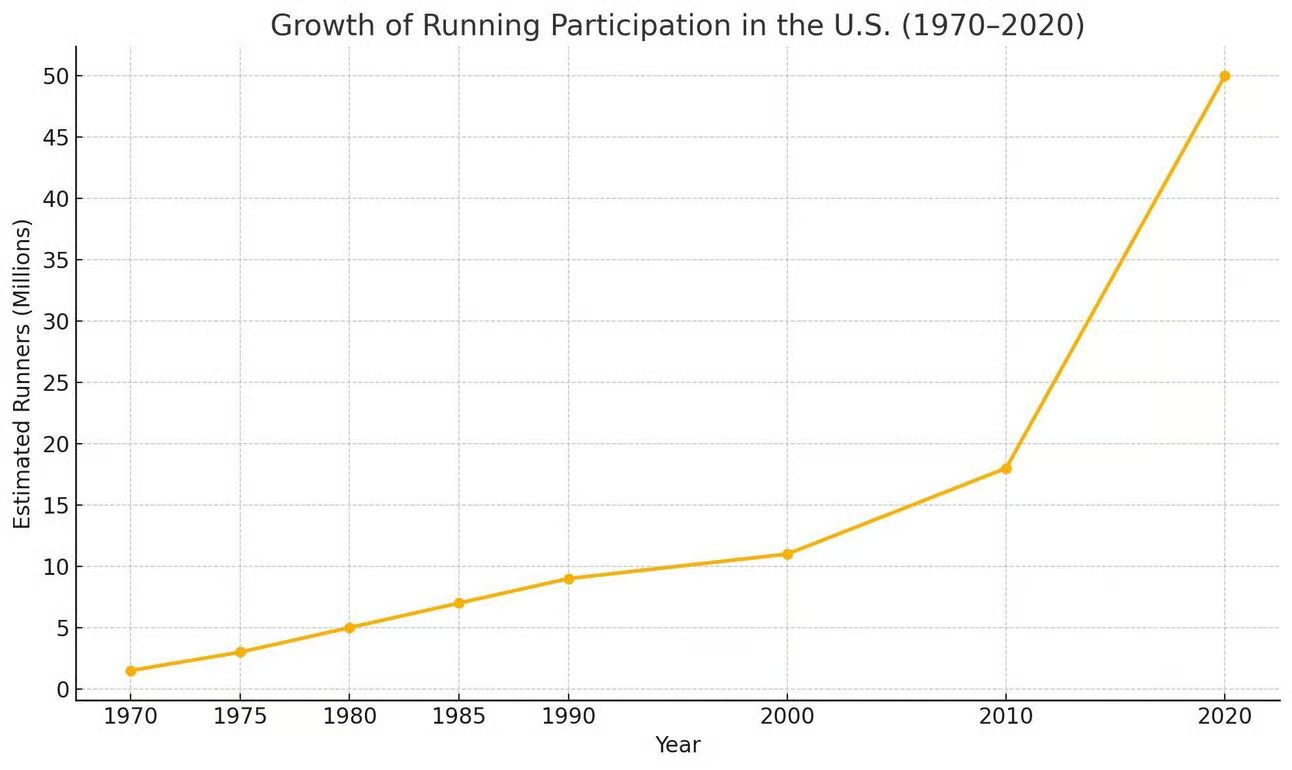
I'm not sure if this is exponential growth… but it looks close so I’ll run with it (pun intended).
Regardless, I'd be remiss to continue without thanking Frank Shorter and the 3 politicians (Patsy Mink, Birch Bayh and Edith Green) who championed Title IX. Thank you for starting the first running boom Frank, Patsy, Birch and Edith!
Now, back to the late 1970s.
The running boom helped the Boston marathon grow (from 1,000 runners in 1970 to 8,000 in 1979) and gave birth to many races that we cherish to this day. Examples of races that started around this time include:
Race growth gradually increased through the late 1980s before leveling off in the 1990s for 2 main reasons:
As the 90s came to a close, race growth slowed.
This was also the era when 5Ks gained popularity as an accessible format for communities, charities, and schools. To see how organizers shape them today, check out types of 5Ks.
While marathons grabbed headlines during the running boom, the 5K quietly became the most popular race distance in America.
Why?
Today, thousands of 5Ks take place every year, helping charities, schools, businesses, and local communities raise money and bring people together.
The 21st century brought 4 main factors that caused races to grow like wildfire:
As races became popular, businesses emerged to support them. Examples include:
As the 21st century progressed, technology fueled the continued growth of races.
With race popularity surging and technology "eating the world," quite a few race software companies entered the mix. Companies like UltraSignup (founded 2009), RunSignUp (founded 2010), RaceRoster (founded 2011), RaceEntry (founded 2012), Haku (founded 2013), and Let's Do This (founded 2016) all got started during this period.
If you’re deciding between platforms, check out our guide on choosing the best race registration platform for a detailed comparison of these options.
It is also at this time that Active Network, which started back in 1998, was acquired by a private equity firm (Vista Equity in 2013) before being sold to a public company (Global Payments in 2017) to focus on government payments.
With new technology innovations and continued growth in running participation, races thrive until a global pandemic brings the events to a screeching halt in 2020.
Inspired by the history of running and thinking about hosting your own race?
Download our free 5K Race Planning Checklist to stay organized with permits, registration, sponsors, volunteers, race timing, and race-day logistics.
Races are wiped out like the dinosaurs. A few races successfully transition to virtual events, but most don’t. COVID was bad news for races in 2020. But it appears to be fantastic news for races now and in the future. Here are 3 reasons why:
The result is a record number of runners who have a voracious appetite for races. No wonder that races are more popular than ever.
A lot has happened since the Greek messenger's legendary run in 490 B.C.
Although the run killed him, his legacy (including record participation at the London Marathon) lives on.
➡️ Tired of complicated software? See how Run The Day makes registration and check-in easy. Schedule a demo to experience simple software built for 5K races.
The "K" stands for kilometer. A 5K race covers 5 kilometers, which equals 3.1 miles.
Running experienced a major boom during the 1970s after Frank Shorter won Olympic marathon gold in 1972 and Title IX increased women's participation in sports.
Organized races date back to Ancient Greece. The modern marathon was inspired by the legendary run from Marathon to Athens in 490 B.C.
The first modern Olympic marathon was held during the 1896 Olympic Games in Athens, Greece.
Online registration, RFID timing chips, social media, and smartphones helped races reach larger audiences and improve race-day experiences.