The Rundown Newsletter
View Results
Ian Campbell | June 24, 2026
“It’s a thankless job!” the race director’s spouse says.
“You spend months recruiting volunteers, ordering shirts and medals, checking registration numbers, coordinating vendors, promoting the event and selling sponsorships—only to show up on race day and get yelled at. And think of everything that could go wrong—a runner could get hit by a car, your timer could get a flat tire and not show up or the weather could be miserable and maybe even force you to cancel the entire event!”
Organizing a race can definitely feel thankless. If 5Ks were just about running, it would be silly to jump through all the hoops required to make them happen.
But 5Ks aren’t just about running. They’re powerful events—hosted by charities, schools, cities, volunteer-led groups and businesses to bring people together and raise money for causes that create a lasting impact.
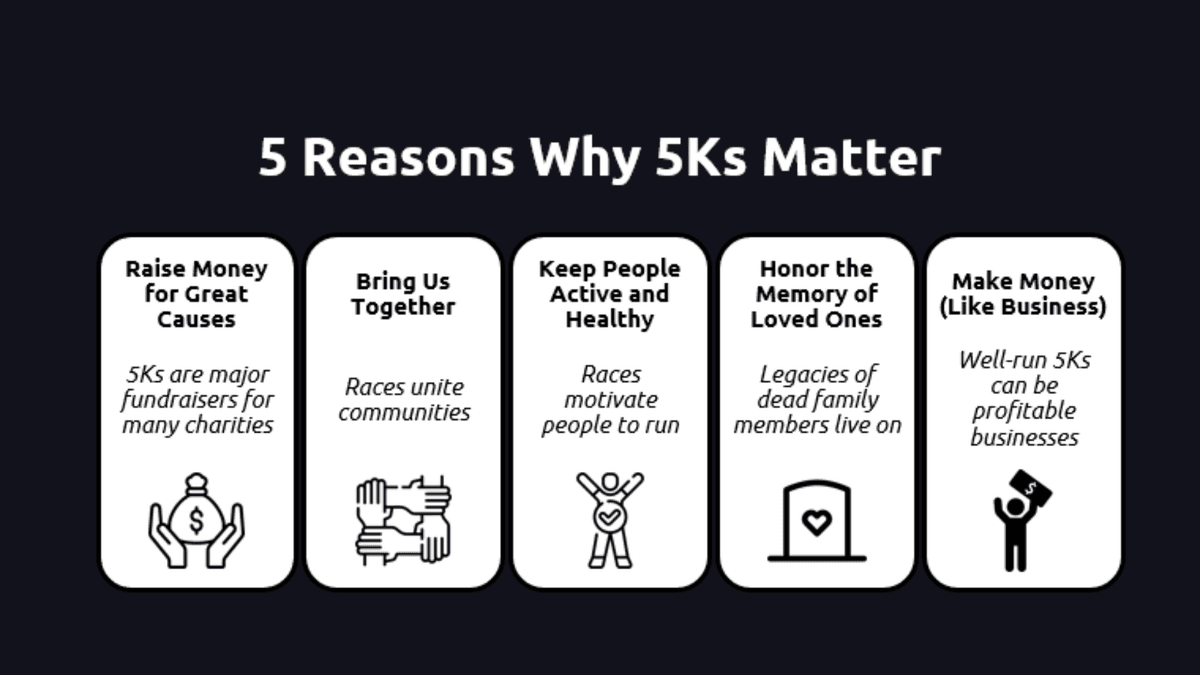
Whether you're organizing a fun run to raise funds for the PTO at your kid’s school or working to grow a professional race series that earns millions in annual profit, this guide breaks down the five most common goals of hosting a 5K—so you can build a race that aligns with what matters most to you and your community.
Many nonprofits use 5Ks as major annual fundraisers. Some raise $2,000. Others generate $10,000, $300,000—or even millions each year. When these events become annual staples for both the organization and the community, they can function like an annuity—providing consistent, dependable funding for the mission year after year.
Tips for success:
Looking for creative ways to increase donations? Explore these 5K fundraiser ideas that help nonprofits raise more money.
School fun runs are among the most effective—and community-friendly—ways to raise money for education. Parents, teachers, and students all get involved.
Ideas that work:
Related: Organize a School Fun Run for Fundraising
Many Rotary and Kiwanis Clubs raise tens of thousands of dollars through 5Ks—to fund club operations or give back to the community. With a built-in volunteer base, races are a great way to strengthen club unity while raising money.
5Ks offer a fun, healthy way for congregations to come together—and attract new participants from the broader community.
Most pro teams have a charitable division. In Philadelphia, the Eagles Autism Challenge gives fans the chance to support a cause, meet players, and experience the field. On the West Coast, events held at the Rose Bowl let runners take in the stadium’s iconic beauty.
The amount a 5K raises depends on registration numbers, sponsorships, donations, and fundraising efforts.
Typical examples:
The biggest fundraising races combine registration fees with sponsorships, peer-to-peer fundraising, donations, and merchandise sales.
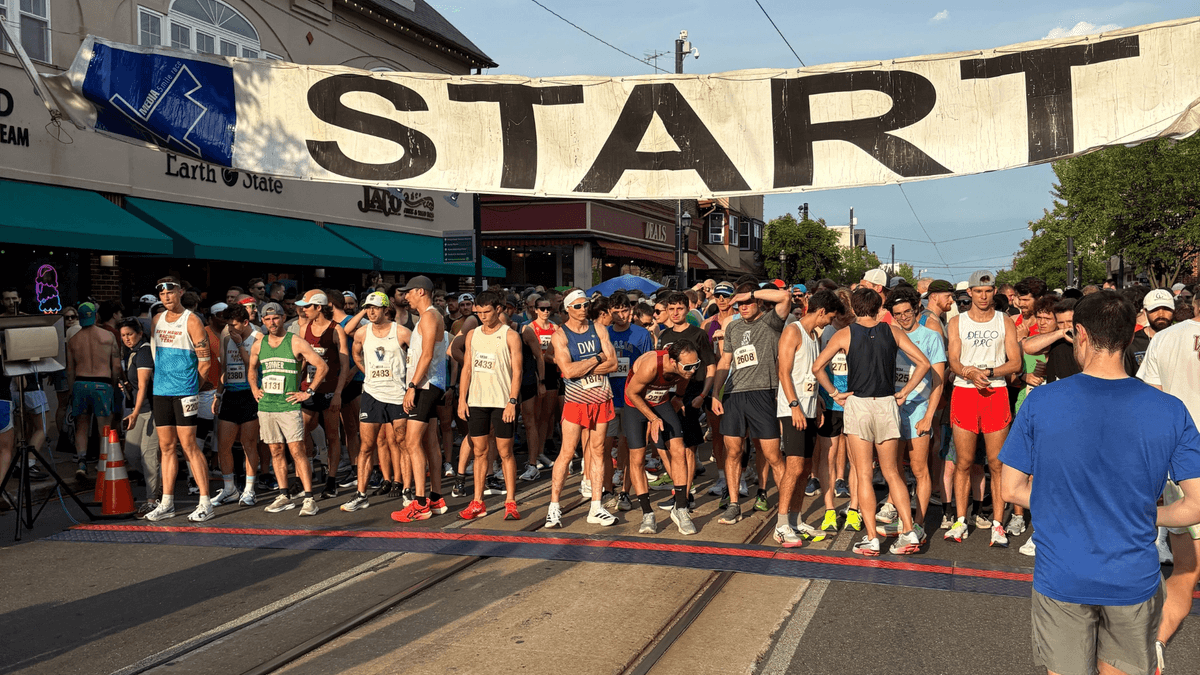
5Ks create unforgettable shared experiences. From high-fives at the finish line to pancake breakfasts and vendor tents, they build relationships and local pride.
Run clubs and neighborhood groups use races to unite their communities and showcase hometown pride.
Make it memorable:
Many cities and towns have a special events team or a parks and recreation department tasked with organizing fun, unifying experiences. A 5K is a natural fit—easy to host, good for health and great for building community.
Townships often use races to strengthen community connections. Learn how township race registration and timing solutions simplify event management.
People crave reasons to gather. A local 5K gives old friends a place to reconnect and new families a way to plug in. These shared experiences become memories we carry with us to our deathbeds.
Races tied to holidays are crowd favorites:
They’re festive, family-friendly, and fun for the entire community.
These exploded in popularity during the COVID pandemic—and still continue today, especially in global or remote communities. Virtual races can foster connection, encourage movement and raise funds—even when participants are miles apart.
Many local businesses organize or sponsor 5Ks as a way to give back, gain visibility and strengthen community ties.
Let’s face it training for a 5K gives people a reason to move. For beginners, it’s a friendly entry point. For regular runners, it’s motivation to stay consistent.
Ideas to encourage fitness:
Schools frequently use races to encourage healthy habits. Here's how to organize a school fun run that engages students and families.
Bonus: When people feel good physically, they show up more—at school, at work, and in the community.
Memorial 5Ks are some of the most emotionally powerful events you can organize. They bring healing, celebration, and purpose.
Why it matters:
Related: Memorial Race Planning Guide
Memorial race tips:
Some races are built to grow into major brands. Whether it’s a fun theme or a premium event experience, well-run 5Ks can be profitable businesses.
Think: glow runs, costume contests, color dashes.
Keys to success:
Large events can charge premium prices by offering medals, shirts, live music, and a high-energy post-race party.
Add-ons that increase value:
From the Hot Chocolate 5K to Spartan Obstacle Courses and Diplo’s Run Club, national race series attract thousands of participants with consistent branding and professional production.
If you want to go big:
Obstacle courses, endurance runs, or hybrid fitness events (like HYROX) offer a competitive twist and can command premium pricing. These events appeal to a different crowd—more intense, more niche, but highly loyal.
Running aHEAD of Cancer 5K
Raised over $25,000 with more than 500 runners.
Read Write Run 5K
Simplified race-day logistics and welcomed over 100 participants for their school race.
Moyer 5K
Attraced more than 800 runners—despite pouring rain.
Different race formats support different goals:
| Goal | Recommended Race Type |
| Fundraising | Charity 5K |
| Community Building | Township Fun Run |
| School Support | School Fun Run |
| Memorial Event | Memorial Race |
| Profit Generation | Themed 5K |
| Family Participation | Color Run or Fun Run |
Choosing the right race format helps attract the right audience and improves participant satisfaction.
Organizations host 5K races to raise money, build community, promote healthy lifestyles, honor loved ones, or generate revenue.
Charity races, themed runs, holiday races, and established annual events often generate the highest revenue through registrations, sponsorships, and donations.
Yes. A well-organized 5K can raise thousands of dollars through entry fees, sponsorships, donations, and peer-to-peer fundraising.
Most successful 5K races require 3–6 months of planning, though larger events may begin planning a year in advance.
No two 5Ks are alike—but every successful race starts with a clear purpose. Whether you're honoring a loved one, fundraising for a cause you are passionate about, building a business, or just bringing your community together, Run The Day can help make your race unforgettable.
➡️ Feeling overwhelmed by the details? Let’s make your next 5K stress-free. Book a quick call and we’ll walk you through what we've seen work for thousands of race directors.