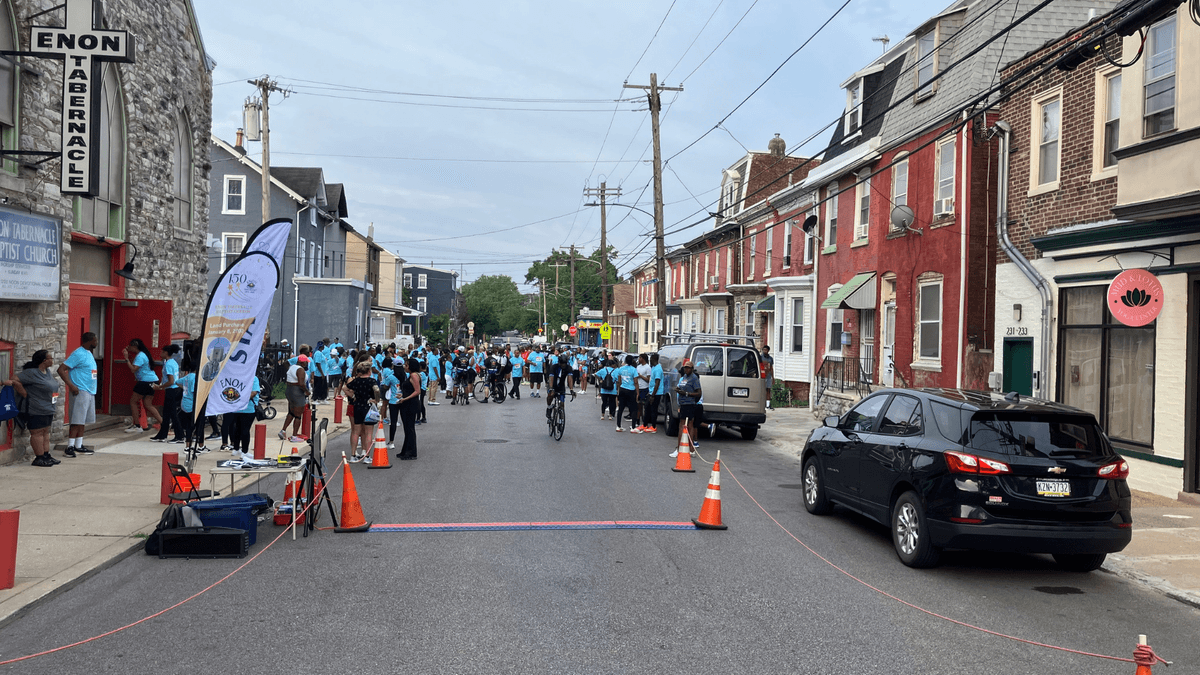
Bib assignment sounds like a small operational detail.
In reality, it can affect registration revenue, event prep work, volunteer stress, lines at packet pickup and runners' race day experience. Getting it right won’t make your race a hit. But getting it wrong can make your race a flop.
Over the past decade, most community 5Ks and charity walks have moved away from old-school packet pickup toward mobile-first check-in and dynamic bib assignment. That shift has changed how races prepare, staff race morning and handle late registrations.
Choosing the right bib assignment method is an important part of learning how to time a 5K race correctly. Bib strategy affects everything from registration flow to timing accuracy and race-day check-in, especially for small and community races.
Since 2003, Run The Day has supported races with less than 50 runners and races with more than 5,000+ participants. Today, more than 95% of the races that we work with use dynamic bib assignment.
Before choosing a system, it helps to understand the three main approaches to assigning bibs—and the pros and cons to each method.
Quick Answer: Static vs Dynamic Bib Assignment
For most community 5Ks, dynamic bib assignment is the better option.
Why?
- It keeps registration open longer
- Reduces packet pickup prep work
- Handles late changes more easily
- Cuts volunteer stress on race morning
- Syncs better with race timing and results
Static bib assignment can still work for very small races with simple logistics, but most events outgrow it quickly once registrations, corrections, and race-day changes start piling up.
The 3 Main Ways to Assign Bibs for a 5K Race
Most races use one of these three methods:
- Static bib assignment
Bib numbers get assigned before race day by labeling bibs with runners’ names.
- Dynamic bib assignment
Bib numbers are assigned at check-in using a mobile app.
- Mail-out bibs
Bibs (and often shirts) are mailed in advance—most common with large marathons.
Each approach has trade-offs depending on race size, staffing, comfort with technology, and budget.
What Is Static Race Bib Assignment?
(The Old-School, Pre-iPhone Method)
Static bib assignment means bib numbers get assigned to runners before race day.
How Static Bib Assignment Works
The static bib assignment method has been used for decades and still shows up in small-town races and school fundraisers.
The typical workflow:
- Registration closes days (or weeks) before race day
- Bib numbers are assigned in a spreadsheet or timing software
- Labels with the runners names are printed and applied to bibs
- Packets are stuffed, sorted, and boxed by last name
- Volunteers dig through alphabetical stacks of bibs to hand out pre-labeled packets at pickup
This is where the classic alphabetized packet pickup table comes from.
Benefits of Static Bib Assignment
- Peace of mind
Everything is boxed, labeled, and ready before race weekend.
- Predictable workflow
Volunteers know exactly what to hand out.
- Works with zero technology
No phones, apps, Wi-Fi, or cell service required.
Downsides of Static Bib Assignment
- Registration must close early
You lose the most valuable signup window—the final 48 hours.
Many 5Ks see 15–40% of registrations during that period.
- More manual prep work
Packet stuffing, sorting, labeling, and re-labeling takes real time.
- Hard to adapt when things change
Name fixes, age corrections, transfers, or forgotten bibs quickly create chaos.
- Unused bibs from no-shows
Print 500 bibs, get 420 runners—80 go unused.
This is one reason many organizers rethink older systems when they organize a 5K and realize how much late registration volume they lose.
What Is Dynamic Race Bib Assignment?
(The Modern, Mobile-First Standard)
Dynamic bib assignment flips the old process on its head.
How Dynamic Bib Assignment Works
- Registration stays open until the start of the race
- Volunteers search a runner’s name in a mobile app
- A bib number is assigned on the spot
- The assignment instantly syncs with race timing software for 5K races
- No spreadsheets. No pre-sorting. No early cutoff.
Advantages of Dynamic Bib Assignment
- Keeps registration open until the last minute
A major revenue unlock for charity 5Ks.
- Massively reduces prep work
No packet stuffing. No digging through alphabetized stacks of bibs to find a needle in the haystack.
- Faster, cleaner check-in
Shorter lines and smoother flow. Every volunteer can help every participant.
- Real-time corrections
Misspelled name? Wrong birthdate? Fixed in seconds.
- No wasted bibs
You only assign and hand out bibs to the runners who actually show up.
- Ideal for volunteer crews
Fewer people required to staff packet pickup and race day. Volunteers can be trained in 30 seconds.
- Mobile-friendly for runners
Register on a phone using Apple Pay, Google Pay, or credit card.
At this point, many race directors realize the problem isn’t volunteers or runners—it’s outdated systems.
If your current system makes bib assignment feel harder than it should be, you’re not alone.
Disadvantages of Dynamic Bib Assignment
- Volunteers need to use an app
Usually less than a minute of training.
- Occasional mistyped bib numbers
It happens—but modern systems (including Run The Day) catch and fix this quickly.
The Third Method: Mailing Bibs to Participants
(Common in big marathons that have large budgets)
How Mail-Out Bibs Work
- Bibs and shirts are mailed 1–3 weeks before race day
- Participants arrive ready to run
- Common for 10Ks, half marathons, and major city races
Advantages of Mailing Bibs
- Eliminates packet pickup
- Fewer staff and volunteers needed on race day
- Very smooth race mornings for large fields
Downsides of Mail-Out Bibs
- Higher fulfillment costs
Printing, labor, shipping, and address issues add up.
- Registration must close early
Similar to static bib assignment, registration must close weeks before race day.
- More points of failure
Lost packages mean last-minute replacements.
- You lose the community moment
There is no opportunity for packet pickup at a local bar, brewery, or running store to drive:
- buzz
- sponsor exposure
- merch sales
- social media activity
Mailing bibs trades community energy for convenience.
Free Race-Day Check-In & Bib Assignment Checklist
Still deciding between static and dynamic bib assignment? Download our free Race-Day Check-In & Bib Assignment Checklist to ensure smooth registration, accurate timing, and shorter lines on race day.
How to Choose the Right Bib Assignment Method
The right bib strategy depends on the size and style of your race.
Choose static bib assignment if:
- your race is small
- registration closes early
- you want zero technology on race day
- your volunteer team prefers pre-sorted packets
Choose dynamic bib assignment if:
- you want to keep registration open later
- your race handles lots of last-minute changes
- you want shorter check-in lines
- your timing and registration systems need to stay in sync
Choose mail-out bibs if:
- your race is large and premium-priced
- convenience is a major part of the runner experience
- you have the budget for fulfillment and replacements
Which Bib Assignment Method Is Best for a 5K or Charity Race?
Here’s the short answer:
- Very small races with limited tech?
Static can work—but expect fewer late registrations.
- Most community 5Ks, schools, townships, and charity events?
Dynamic bib assignment is the clear winner.
- Large, premium races charging $150–$300+?
Mail bibs and shirts in advance to save your participants time.
Why Run The Day Supports All Three Approaches
Run The Day’s team has 20+ years of race-day experience, which is why the platform supports every bib strategy—not just one.
- Dynamic bib assignment via a fully integrated mobile app comes at no additional cost
- Support for static bib workflows when races prefer pre-assigning bibs for peace of mind
- Partnerships with fulfillment teams for races that want to mail packets in advance
The goal is simple:
Reduce race-director workload and improve the runner experience.
For races comparing broader setup options, this also connects directly to choosing the best registration platform for your 5K race.
No matter which bib strategy you choose, execution matters on race morning.
When timing, registration, and bib assignment don’t talk to each other, even good plans fall apart.
➡️ Need help choosing the right setup? Get a race timing quote from Run The Day. We support both full-service and DIY timing options starting at $499 per event.
Final Takeaway
- Static bib assignment = peace of mind, but more work and fewer registrations
- Dynamic bibs = modern, streamlined, and volunteer-friendly
- Mail-out bibs = premium convenience for runners of large and expensive races
Run The Day supports all three approaches —so race directors can choose what fits their event, not force their event to fit the right software.
FAQs: Bib Assignment for 5K & Charity Races
Q1: What is a dynamic bib assignment?
Ans: Dynamic bib assignment means bib numbers are assigned at check-in using a mobile app instead of being pre-labeled before race day. It allows races to keep registration open longer, reduce prep work and avoid wasted bibs.
Q2: Is static bib assignment still used for 5Ks?
Ans: Yes. Static bib assignment is still used at small races and events that want to use no technology on race day. However, it usually requires early registration cutoffs and more manual work.
Q3: Which bib assignment method is best for charity races?
Ans: Most charity races choose dynamic bib assignment because it captures last-minute registrations, reduces volunteer workload, and simplifies race-day operations.
Q4: Do dynamic bib assignments require Wi-Fi on race day?
Ans: Not always. Many modern race timing platforms, including Run The Day, are designed to work reliably in low-connectivity environments with sync options.
Q5: Why do some large races mail bibs to runners?
Ans: Mail-out bibs are common in large, premium races where convenience is part of the experience.They reduce race-day congestion but increase fulfillment costs and remove opportunities for community engagement.
Q6: Which is better for most community 5Ks: static or dynamic bib assignment?
Ans: For most community 5Ks, dynamic bib assignment is the better choice because it reduces prep work, supports later registration, and handles race-day changes more smoothly.
Q7: What Is a Timed Bib?
Ans: A timed bib is a race bib that includes an RFID timing chip. When runners cross the start, finish, or split timing mats, the chip records their time automatically. Timed bibs are commonly used in 5Ks, marathons, triathlons, and other races that use chip timing.