The Rundown Newsletter
View Results
Ian Campbell | July 29, 2026
Many race organizers focus on generating registrations.
But for charity races, registrations are only part of the financial equation.
Fundraising from donations and sponsors can determine the overall financial success of the event.
One of the most effective ways to increase donations is through team fundraising competitions.
Instead of asking participants to fundraise individually, team-based fundraising creates friendly competition, encourages accountability, and motivates participants to raise more money for the cause.
Whether you're planning a charity 5K, school fundraiser, or community event, a team fundraising challenge can significantly increase engagement and donations.
This guide explains how to set up a successful fundraising competition for your race.
If you're still in the early planning stages, it's helpful to understand the key steps involved in organizing a race before building your fundraising strategy.
A team fundraising competition allows participants to create groups that compete to raise the most money. By offering incentives, tracking progress, and recognizing top fundraisers, race organizers can increase donations while creating a more engaging participant experience.
People are naturally motivated by:
When participants fundraise as part of a team, they often raise more money than they would individually.
Benefits include:
Key takeaway: Team fundraising turns raising money into a shared experience rather than an individual task.
| Element | Purpose |
| Team accountability | More dollars fundraised |
| Friendly competition | Higher engagement |
| Leaderboards | Increased motivation |
| Social sharing | Greater visibility |
| Team captains | Easier communication |
| Recognition programs | Stronger participation |
There are several approaches to building fundraising teams.
Local businesses compete against one another to raise the most money.
Classes, grades, clubs, or sports teams participate together.
Friends, families, and neighborhood groups form teams around a shared goal.
Sponsors create fundraising teams to support the event and increase visibility.
The best structure depends on your audience and fundraising objectives.
For community-focused events, many organizers use approaches similar to those outlined in township race registration and timing programs where local groups play a central role in participation.
Participants perform better when expectations are clear.
Examples include:
Goals should feel ambitious but achievable.
Breaking larger targets into smaller milestones makes progress feel more attainable and helps maintain momentum throughout the campaign.
You can recognize teams as they reach specific milestones rather than waiting until the day of the event.
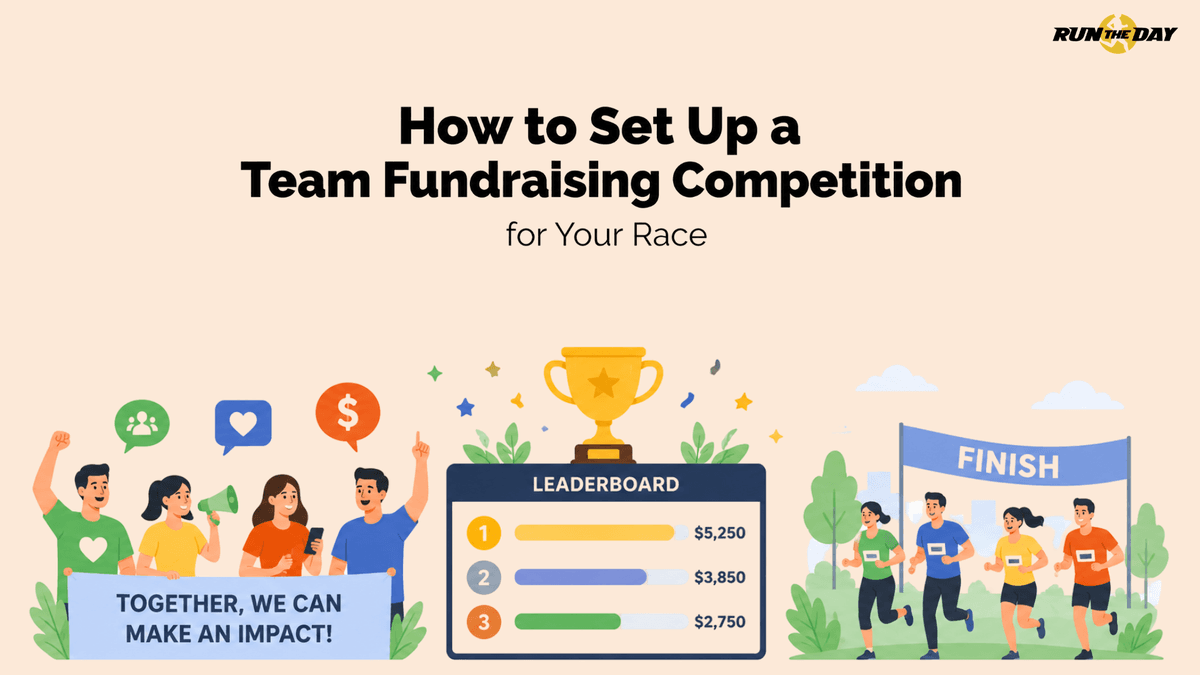
Leaderboards add visibility and motivation.
Display:
Participants enjoy seeing their progress compared to other teams.
Leaderboards create natural opportunities for social sharing and friendly bragging rights.
Many organizers find that competition increases when participants see real-time fundraising progress.
Rewards do not need to be expensive.
Popular incentives include:
Recognition often motivates participants just as much as prizes.
People enjoy supporting a cause, but they also appreciate being recognized for their efforts.
The key is creating incentives that feel meaningful without significantly increasing event expenses.
Successful fundraising starts with strong race planning. Download our free Race Planning Checklist and get a step-by-step guide covering registration, sponsors, volunteers, fundraising, and race-day operations.
Complex fundraising systems reduce participation.
Look for systems that provide:
The easier it is to donate, the more likely supporters are to contribute.
A confusing donation process can discourage even the most enthusiastic supporters.
Many organizers choose the best race registration platform available to ensure participants and donors can complete transactions quickly and easily.
Strong fundraising campaigns require consistent communication.
Email works well for:
Social media works well for:
Using both channels together typically produces stronger results than relying on either one alone.
Understanding the strengths of email vs social media for race registrations can help organizers create more effective fundraising campaigns and participant outreach.
Don't wait until race day to recognize success.
Examples include:
Ongoing recognition keeps participants engaged throughout the campaign.
When participants feel their efforts are noticed, they are more likely to continue fundraising and encouraging others to donate.
Small wins create momentum that lasts throughout the event.
Sponsors can enhance fundraising competitions by providing:
Many businesses enjoy participating when fundraising goals align with community causes.
Sponsor-supported challenges can generate excitement while helping raise additional funds.
For example, a sponsor may agree to match all donations made during a specific week or provide prizes for the highest-performing team.
Many of these ideas align with proven 5K race sponsorship strategies that create value for both organizers and sponsors.
Avoid these common mistakes.
Goals should motivate participants rather than discourage them.
Simple competitions generally perform better.
Regular updates help maintain excitement and momentum.
Recognition and rewards matter, even when participants are fundraising for a meaningful cause.
The donation process should be fast, mobile-friendly, and easy-to-use.
The simpler the fundraising experience, the more likely participants are to stay engaged.
Different race formats often benefit from different fundraising approaches.
Focus on total dollars raised by individuals and teams.
Create class-versus-class or grade-versus-grade competitions.
Many organizers use team fundraising as part of a larger school fun run strategy to increase participation and donations.
Fundraising can be centered around a personal story, cause, or individual being honored.
If you're organizing this type of event, understanding memorial race planning can help create a stronger connection between participants and the cause.
Encourage local businesses, gyms, schools, and community groups to compete against one another.
Community-based competitions often generate strong local engagement and sponsor participation.
Modern race platforms help organizers:
An easy-to-use, one-stop-shop race management platform reduces administrative work while improving fundraising outcomes.
Instead of managing multiple systems, many organizers prefer all-in-one race platforms that combine fundraising, registration, communication, and race-day systems in one place.
This allows organizers to spend more time supporting their cause and less time managing spreadsheets.
Run The Day helps organizers support fundraising efforts through:
As a one-stop-shop platform, Run The Day helps races focus less on administration and more on supporting their cause.
Whether you're organizing a charity 5K, school fundraiser, or community event, having registration, fundraising, timing, and communication systems in one place can simplify operations and improve the participant experience.
Yes. Team accountability and friendly competition often increase participation and fundraising totals.
Goals vary by event size, but clear and achievable targets tend to perform best.
Friendly competition usually improves engagement and increases donations.
Recognition, trophies, sponsor prizes, and special race-day perks are all effective.
Absolutely. Team fundraising works well for races of all sizes.
Fundraising success rarely happens by accident.
The most effective charity races create systems that encourage participation, recognition, and community involvement.
Team fundraising competitions help races:
When combined with strong promotion and easy-to-use technology, team fundraising can significantly improve the impact of your event.
If you're looking to grow participation alongside fundraising, learning how to promote a 5K race can help attract more participants and supporters.
Planning a charity race?
Run The Day helps race organizers manage registration, fundraising, timing, and participant communication through an easy-to-use, one-stop-shop platform designed to help events grow.