The Rundown Newsletter
View Results
Ian Campbell | September 15, 2026
Have you ever wondered how thousands of runners get an individual finish time when running a 5K, half marathon, or marathon?
The answer is race timing technology.
Race timing has evolved from volunteers using stopwatches and handwritten finish lists to modern systems that use RFID timing chips, timed bibs, timing mats, antennas, and race timing software.
If you've ever wondered what a timed bib is, how a timing chip works, or how marathon timing systems record thousands of runners, this guide explains how it all works.
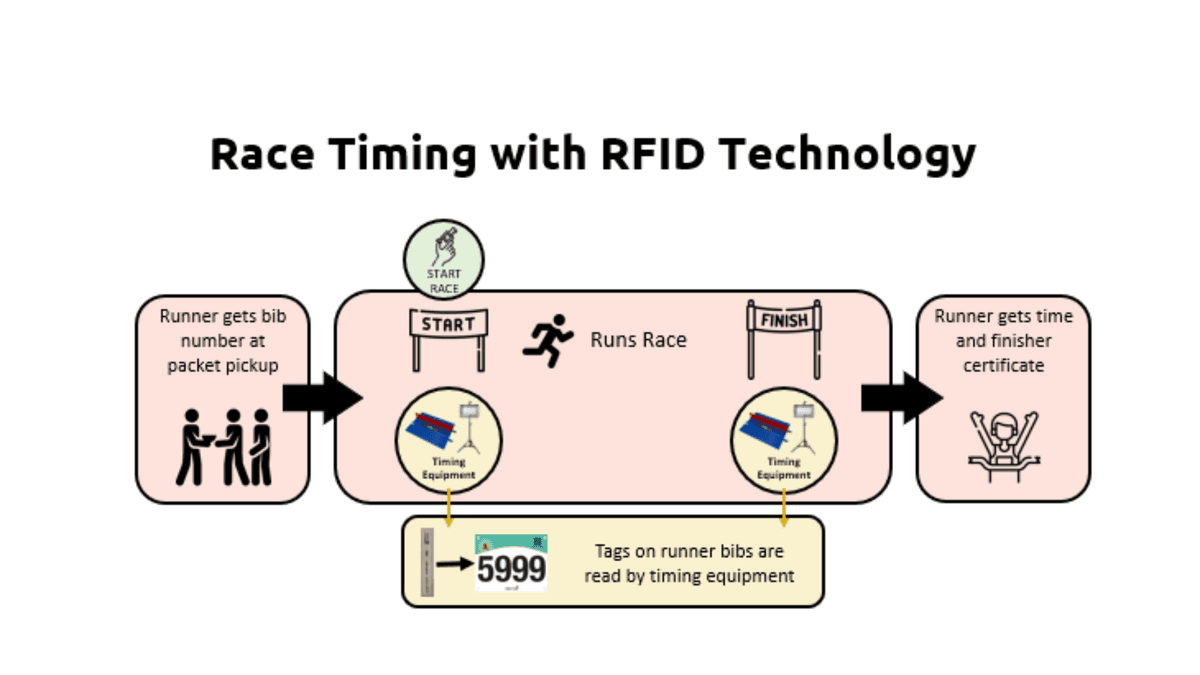
Modern race timing systems use an RFID chip attached to a runner's bib, shoe, or tag to identify the participant as they cross timing points.
Here's the basic process:
For larger races, RFID timing makes it possible to process large numbers of runners quickly and accurately.
A timed bib is a race bib that contains an RFID timing chip used to record a runner's race times automatically.
The bib usually contains:
The timing chip has a unique identifier associated with the runner's registration record.
When the runner crosses a timing point, the RFID system detects the chip and records a timestamp.
That's why you may hear terms such as:
In many modern races, the timing chip is built directly into the back of the bib, so runners may not even realize there is a chip inside it.
A timing chip in a marathon is a small RFID transponder used to identify a runner and record their time as they cross timing points throughout the course.
In many modern marathons, the timing chip is attached directly to the race bib.
As the runner crosses timing mats, the system can capture:
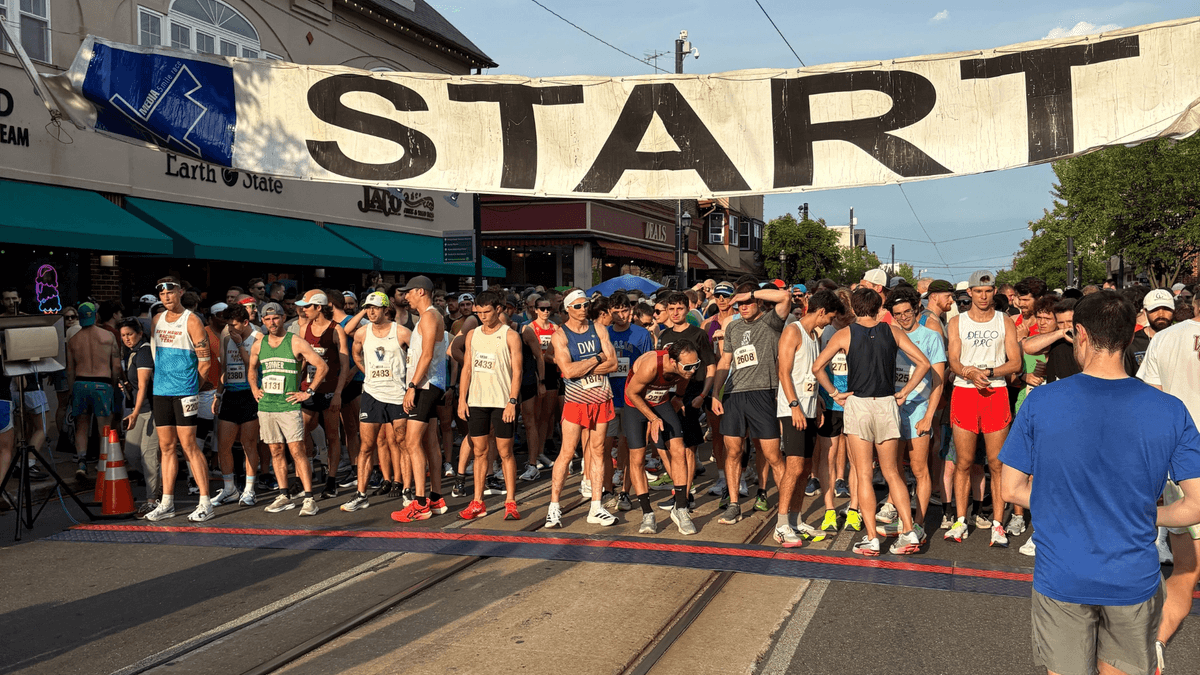
This is particularly important in large marathons because thousands of runners may cross the start and finish areas within a short period.
Without an automated timing system, recording each runner's time manually would be extremely difficult.
A marathon timing chip allows the race organizer to automatically associate a runner with specific timestamps.
Depending on the race setup, timing points may be placed at the:
This allows runners and race organizers to see more than just the final finish time.
Race timing wasn't always automated.
In the early days of organized races, volunteers used clipboards, stopwatches, and handwritten records to capture finishers.
One person might record the finishing time while another recorded the runner's bib number.
Another early approach was pull-tab timing. Timers would record times while tabs attached to runners' bibs were collected and matched with the recorded times.
These systems could work for smaller races, but they became increasingly difficult as participation grew.
More runners meant:
As races grew, organizers needed a more automated way to identify runners and capture their times.
The major technological shift came with Radio-Frequency Identification (RFID).
RFID uses radio waves to identify a tagged object. In race timing, the tagged object is the runner's timing chip.
Here's the basic process:
This removed much of the manual work involved in recording race results.
RFID technology has since become an important part of modern race timing systems, particularly for races that need to process large numbers of participants.
Imagine the timing system as a communication chain.
Timing chip → antenna → decoder → timing software → race results
When a runner crosses a timing mat, the antenna detects the RFID chip attached to the runner's bib.
The reader captures the chip's unique identification information and sends the data to the timing system.
The timing software then connects that information to the runner's registration record.
In simple terms:
The bib identifies the runner. The timing equipment records the crossing. The software turns that information into a race result.
This allows organizers to capture times without manually recording every runner as they cross the finish line.
For more detail on the equipment involved, see our guide to 5K race timing equipment.
A modern race timing system usually combines several components.
Each chip has a unique identifier associated with a participant.
Timing mats are positioned at the start, finish, and sometimes split points.
Antennas detect the RFID chips as runners pass through the timing area.
The decoder processes the information received from the timing equipment and sends it to the timing software.
The software matches timing data with registration records and calculates results.
The finished results can then be published for runners, race organizers, and spectators.
The components work together to create the complete race timing system.
One common question is how the system determines a runner's actual race time.
Imagine a runner crosses the start line several minutes after the official race begins.
The timing system can record the runner's individual start and finish crossings when the race is configured for chip-based timing.
This allows race organizers to calculate different types of times depending on the event's timing setup, including gun time and chip/net time.
The important point is that the timing chip provides an automated record of when the runner crosses each timing point.
Timing chips aren't limited to 5Ks.
They are commonly used for:
The equipment and setup can vary depending on the size and complexity of the race.
A 100-runner community race doesn't necessarily need the same setup as a marathon with thousands of participants.
Not every race needs the same timing solution.
For some small events, smartphone-based timing can be a practical alternative to full RFID timing.
RFID timing is generally suited to:
Advantages include:
Smartphone-based timing can be useful for:
Advantages include:
For smaller races, Run The Day's DIY Race Timing uses a phone-based finish-line system rather than timing mats and RFID chips. It is designed for races of roughly 50–250 runners and publishes results live as finishers are entered.
The right option depends on your race size, course setup, timing requirements, and budget.
Whether you're using RFID chips, smartphone timing, or a hybrid setup, timing mistakes can create race-day headaches and inaccurate results.
Download our free Race Timing Setup Checklist to help you prepare timing equipment, assign bibs, test timing mats, verify chip reads, and ensure accurate results from start to finish.
Yes. Very small races can use:
However, manual timing becomes more difficult as the number of participants increases.
When multiple runners cross the finish line close together, volunteers need to identify runners and record times accurately.
That's one reason automated race timing systems are valuable for larger events.
If you're comparing professional timing options and costs, our guide to how much it costs to time a 5K breaks down the major factors that affect pricing.
Race timing doesn't begin when runners cross the finish line.
Participant information needs to be accurate before race day.
The timing workflow often starts with:
This is why registration and check-in can have a direct impact on race timing.
If participant information or bib assignments are incorrect, timing problems can appear later.
For example, efficient race day check-in helps ensure runners and bib assignments are correctly managed before the race begins.
Timing is more than simply producing a list of finishers.
Runners expect their results to be accurate, especially when they're racing for:
For race organizers, inaccurate results can also create unnecessary work after the event.
A reliable timing process helps reduce manual data entry, capture results consistently, and get results to runners quickly.
RFID technology is used in many industries beyond race timing.
Examples include:
The technology continues to evolve, with other wireless technologies such as BLE and NFC also being used in different applications.
Run The Day combines race registration, professional timing, results publishing, and race-day support in one platform.
For races using professional chip timing, the workflow connects:
This reduces the need to move participant information between disconnected systems.
Run The Day also offers a DIY timing option for smaller events that don't need RFID equipment. The current DIY package is designed for approximately 50–250 runners and includes timing software, numbered bibs, training, live results, and race-day support.
A timed bib is a race bib containing an RFID timing chip that identifies a runner and allows the race timing system to record their crossing times.
A timing chip is a small RFID transponder with a unique identifier. When detected by race timing equipment, it allows the system to associate a runner with a specific timestamp.
A marathon timing chip identifies the runner as they cross timing points such as the start, splits, and finish. In many modern marathons, the chip is embedded directly into the race bib.
Race timing systems detect a runner's RFID chip as they cross timing points. The timing equipment records the timestamp, and race timing software matches it to the runner's registration information to produce results.
No. Some race bibs are simply identification numbers. Timed races using RFID technology may have a timing chip built into the bib.
Yes. Small races can use manual timing, stopwatches, or smartphone-based timing. The best approach depends on the race size and timing requirements.
RFID timing systems are designed to capture runner identification and crossing times automatically. Proper equipment setup, testing, participant data, and race-day procedures are all important for reliable results.
Race timing has come a long way from stopwatches and handwritten finish lists.
Today, timed bibs, RFID timing chips, timing mats, antennas, decoders, and race timing software work together to identify runners and capture race times.
For a runner, the process may look as simple as wearing a bib and crossing the finish line.
Behind that result, however, is a complete timing system designed to turn that crossing into an accurate race result.
Whether you're organizing a small community 5K or a larger marathon, understanding how race timing works can help you choose the right timing approach for your event.