The Rundown Newsletter
View Results
Ian Campbell | September 8, 2026
A race website should do more than display your race information. It should help people discover your event, understand what to expect, and register.
For many race directors, building that website creates another problem. Generic website builders require you to build everything yourself, while custom web development can be expensive and difficult to maintain.
An AI race website builder gives race directors another option: start with a complete race website and customize it for the event.
Run The Day's AI race website builder is designed specifically for races, connecting the website directly with race registration and secure payment processing.
That means your race website isn't just a digital flyer. It can become part of the process that turns website visitors into race registrations.
An AI race website builder is a website-building tool designed to help race organizers create an event website without starting from a blank page or writing code.
Instead of manually building every section, the builder can generate a race website structure with content and sections commonly needed for an event, such as:
The race director can then customize the content, images, colors, sections, and layout to match the event.
The biggest difference between a general AI website builder and a race website builder is the purpose.
A general website builder creates websites.
A race website builder starts with the specific information and conversion needs of a race.
A basic registration page can tell someone how to sign up.
A race website can do much more.
It can answer questions before someone registers:
It can also help people discover your race through Google and other search engines.
That makes the website an important part of your race registration strategy, not just an online information page.
Most race websites fall into two categories.
The first is a basic registration page or template with a race logo, a few details, and a registration button.
The second is a custom website built by a designer or developer.
Both can work, but they have limitations.
| Option | Advantages | Challenges |
|---|---|---|
| Registration page | Quick to launch | Limited customization |
| General website builder | Flexible | Race-specific features may need to be built manually |
| Custom website | Highly customizable | Can be expensive and harder to maintain |
| AI race website builder | Fast to launch and customizable | Quality depends on the platform and how much control it provides |
An AI race website builder gives race directors a middle ground: a faster starting point without giving up the ability to customize the website.
This is one of the first questions race directors ask.
An AI-generated website shouldn't mean every race looks the same.
A race website should reflect the identity of the event.
For example, the Christina Chambers Twilight 5K uses its event story and twilight theme throughout the website, while the Philly Ring It On 5K and San Mateo Color 5K have completely different visual identities.
The same website-building system can support different race brands, designs, and event structures.
A customizable race website should allow you to control elements such as:
The goal is for the website to feel like your race, not a generic template.
A race website should not simply look good.
It should make the next step obvious.
That means putting registration opportunities where participants naturally look for them.
Don't make visitors search for the registration button.
Your registration CTA should be easy to find throughout the website.
A countdown can create urgency around race day or registration-price changes.
Participant numbers, testimonials, race photos, sponsor logos, and other trust signals can help visitors feel more confident about registering.
Answering common questions can remove objections before someone leaves the page.
The more easily someone can understand the race, the fewer questions they need to ask before registering.
The goal is simple:
Turn website visitors into race participants.
Your race website can also become an acquisition channel through organic search.
Someone might search for:
Your website needs useful, relevant content that helps search engines understand what the race is, where it takes place, and who it is for.
A race website should therefore include:
Structured data and clear page structure can also help search engines understand the content.
If you're still building your overall race strategy, see our guide on how to organize a 5K race.
One of the biggest advantages of a race-specific website builder is the connection between the website and registration.
A general website builder may require you to:
Website → Registration link → External registration platform
That can create an extra step for the participant.
A connected race platform can make the experience more seamless:
Race website → Registration → Payment → Participant record
This matters because the website is not separate from the registration process.
It becomes part of it.
Run The Day’s AI site builder allows custom websites that are designed to convert traffic into registrants by enabling the use of ecommerce techniques that were previously unavailable to races through most registration platforms.- making it one of the best race registration platforms for 5Ks and community events.
If you're evaluating a race website builder, focus on the features that can actually help your event.
Your race should be able to use a branded domain such as your5krace.com.
Look for:
Your website and registration process should work together rather than sending participants through unnecessary steps.
Look for:
Race directors should be able to update event information without needing a developer.
If you're promoting your race through paid social media, tracking tools can help you understand what happens after someone visits your website.
The platform should understand that a race website needs more than a homepage and contact page.
Run The Day's AI race website builder is designed specifically around race registration and event needs.
Instead of creating a generic website and then trying to add race registration afterward, the website is connected to the race registration experience.
Run The Day's platform build registration and fundraising with custom race websites, participant communication, mobile check-in, professional chip timing, and live results.
That gives race directors a connected workflow:
Website → Registration → Participant Management → Check-In → Timing → Results
The website becomes part of the race-management system rather than another separate tool to maintain.
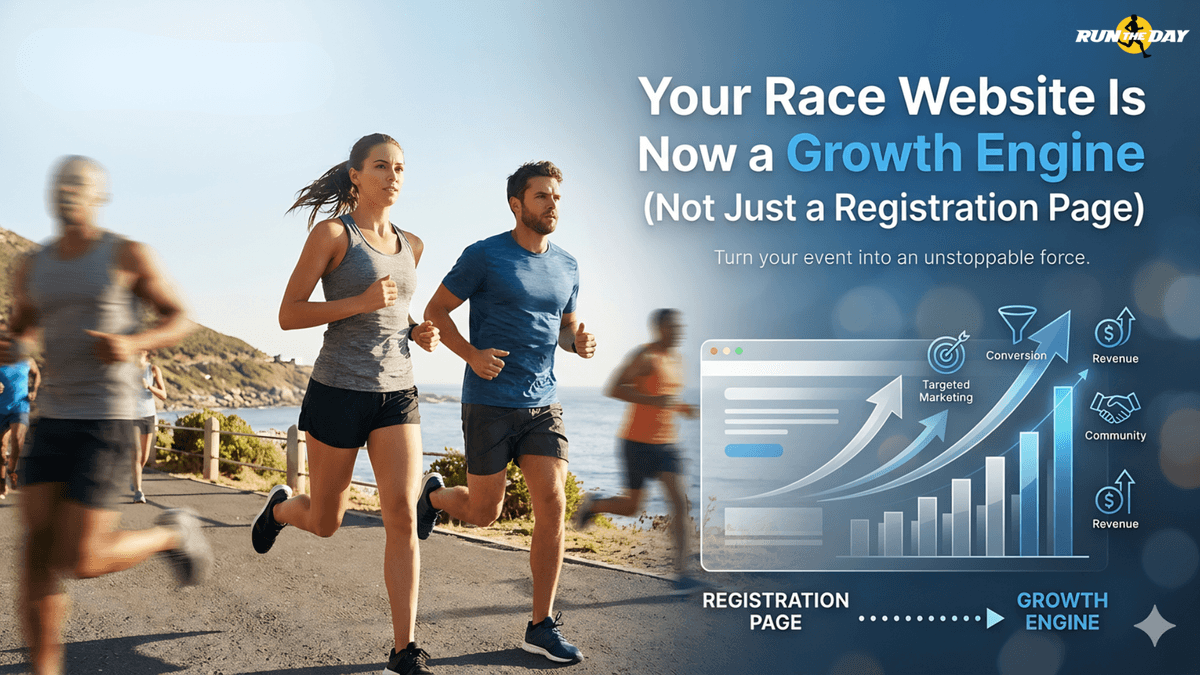
A race website becomes a growth engine when it does more than provide information.
It should help you:
Get discovered → Build trust → Answer questions → Create urgency → Drive registration
That means your website needs to combine:
A beautiful website is useful.
A website that helps more people find, understand, and register for your race is much more valuable.
Your website is only one part of the race-planning process.
If you're building a new 5K, make sure you also plan for registration, permits, sponsors, volunteers, timing, promotion, and race-day operations.
Download our 5K race planning checklist to organize the major steps from planning through race day.
An AI race website builder helps race organizers create a customized event website using AI-generated layouts, content, and race-specific sections without requiring coding experience.
Yes. An AI race website builder can generate a starting structure for a 5K website, including race information, FAQs, sponsor sections, registration CTAs, and other event content.
Yes, depending on the platform. Look for the ability to customize colors, images, content, sections, layouts, sponsor information, and domains.
Yes. Race-specific website platforms can connect the website directly to the race registration experience, reducing the need to send participants to a separate registration system.
Yes. SEO can help people discover races when they search for events by race type, location, date, or event name.
A 5K race website should typically include race details, registration, date and location, course information, schedule, FAQs, sponsor information, contact information, and important race-day instructions.
A race website shouldn't be an afterthought.
It can be the place where participants discover your race, learn about the event, build confidence, and register.
An AI race website builder gives race directors a faster way to create that experience without starting from a blank page or paying for a fully custom website.
But the real value isn't simply generating a website with AI.
It's creating a race website that connects discovery, information, registration, and growth.
That's what turns a race website from a registration page into a growth engine.
Ready to build your race website? Tell us about your race and see how Run The Day can help.