The Rundown Newsletter
View Results
Liz Pagonis | July 17, 2026
We’ll admit it, the options have become overwhelming.
“Do I need a max cushion shoe?”
“Why is it a different size than all my other shoes?”
“What does ‘zero drop’ mean? Sounds like a bad metal band..”
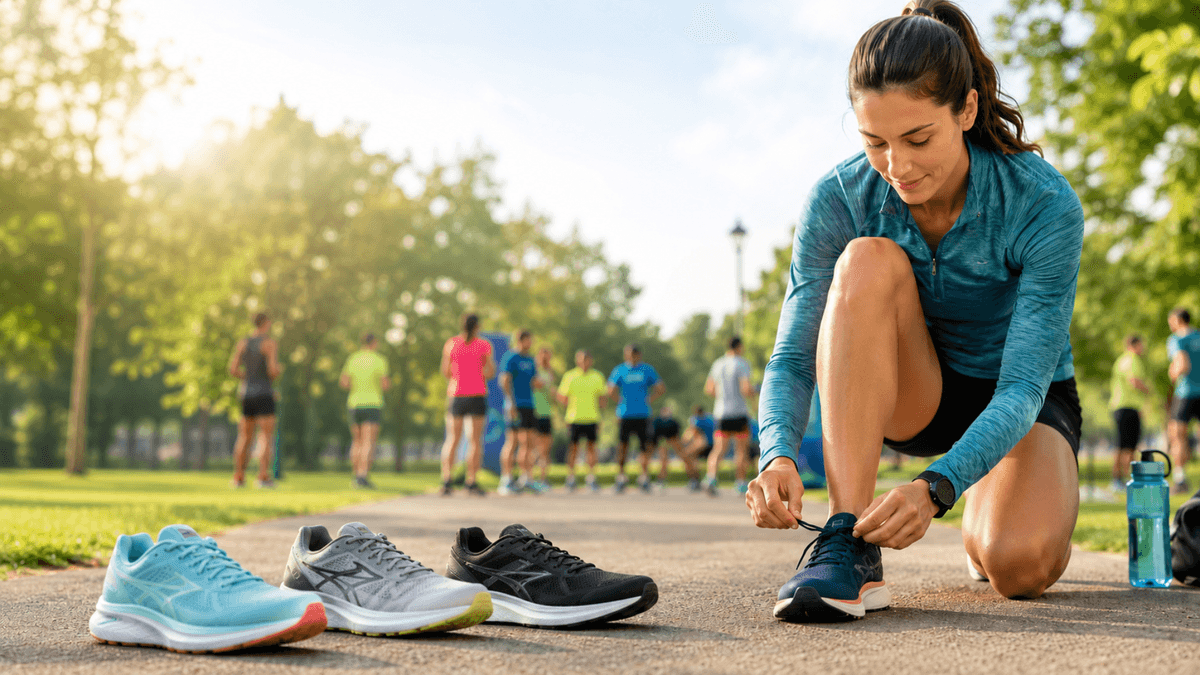
Shoes. Finding the right one can make all the difference in the enjoyment of your training. Get it right and you’re happily floating along. Get it wrong and you’ve any number of issues from blisters to just feeling crappy and bummed from wasting money.
Running shoes are a vital and significant investment in your experience, so we’re here to break down the big categories that our staff take into consideration when giving you the best options. Let’s get into it.
Often, the most surprising thing is that your running shoe isn’t going to be the same size as the rest of your footwear collection. Here’s why.
When you run, your feet expand both due to sweating and handling the necessary mechanics of landing. A casual shoe will be a closer fit on your foot because your foot isn’t likely to get as hot or need to spread out as much while wearing it. A traditional leather shoe will also stretch and conform to your foot over time. Running shoe materials won’t change from how they fit now, so it’s important it feels roomy now in both length and width to accommodate that change.
Without more room, you can get more friction and that leads to blisters and toe nails that decide they’d rather leave than stick it out (it’s not pretty). Increasing a half or even full size depending on the brand/duration you’re likely to run is an important first step. We can actually measure your foot, like when you were a kid, only now - you get to pick your shoes (sorry, mom).
Every time you land while running, it’s multiples of your body weight that hit the ground. Do that a few thousand times on asphalt and the role of cushioning becomes pretty clear to your knees, back and entire being…
Each brand makes options of shoes with different cushioning levels. You may read/hear terms like “max cushion” describing shoes that look like you stepped into a massive marshmallow.
If you’re starting out running or don’t run back to back days - a shoe with a standard amount of running shoe cushioning is likely fine. When you start to run often enough that you’re doing days of running in a row - going with a higher cushion option can be a good thing.
The foamy, squishy materials that make up your shoe take about 48 hours to rebound back to their original state after a run, so the more often you’re in them - the more stress on that foam. For folks who run every day, rotating shoes can also dramatically increase the life-span of the shoe for this same reason.
Surprise! Your feet likely aren’t mechanically perfect for running on their own. That’s ok - we still like you. Your feet are an amazing collection of 26 bones, held together by a network of ligaments and tendons.
The more flexibility there is in that system (often looks like a lower/more flexible arch) - the more chances there are for that support system of ligaments and tendons to get overloaded when landing again, and again, and again...
Shoe brands will generally make two categories of daily training shoes. Neutral and support. The difference between them comes in that foam cushiony material we mentioned earlier.
In a neutral shoe, that foam will be the same density throughout the entire portion beneath your foot, equally soft for your entire foot.
In a support/stability shoe, the foam will be more dense beneath the arch of your foot to match the need for stiffness that your foot may not inherently have (again - we still think you’re great). Outside of that area, it’ll be the same softness as a neutral shoe.
You can also change the elements of support with insoles. The insole that comes with a running shoe is just there to cover up stitching that would otherwise irritate your foot. Swapping it out for something more constructive can reduce pain and discomfort especially of the connective tissues beneath your feet or supporting your ankles.
Good news - insoles are more durable than shoes thanks to not having foam in them, so if you get a pair - they should last a few pairs of shoes.
Doesn’t just refer to listening to Avicii any more (jokes!), now it’s a shoe term that you’ve likely heard about. Here’s what it means and how it may impact your fit.
Running shoe design took off in the 70s with a concept that basically looked like a long wedge thanks to Nike. A thicker piece of foam under your heel, tapering lower toward your toes - thus generally elevating your heel above your toes.
The reason being that it was assumed most people land on their heel - so putting the most padding there made sense. The “drop”, is the difference in that relative height.
Until recently, design and convention kept the drop on running shoes to be pretty consistent. In the last ~10 years, brands have been offering shoe options with a lower or zero drop to be more consistent with the natural mechanics of your foot while not wearing a shoe.
Standing barefoot - you’re in a zero drop environment. However, lots of things change while running and how you run/land - can make a huge difference in whether the drop of a shoe is going to feel better for you.
This is one reason why we ask how much you run, how long you’ve been running and even give you the chance to hop on a treadmill so we can see what’s happening when you run and match the right shoe.
Lastly, depending on where you’re running (trails vs roads) and time of the year - you may want to consider variations in materials. If you run trails often, having a shoe with more grip and water repellency will help, but wearing that same shoe on the roads may feel clunky.
There are also now carbon plated shoes to add a whole new wrinkle into this process. We have entire posts about this topic, but in short.. These shoes add a thin carbon fiber plate into the foam of a running shoe. Carbon fiber is very light and very stiff, so it allows for greater energy return than just foam alone.
For folks looking to race or train competitively - they can be helpful. If you’re looking for a daily driver, they likely aren’t necessary for now.
When you come to any of our stores, our knowledgeable staff will take you through a fit process that answers which of these aspects of shoe design will match best with your feet and training.
Different brands/models will vary in shape - so we’ll bring you a few to choose from that share the necessary elements for you. This way, you don’t have to sift through 18 pages of online reviews or just buy what your friend loves (spoiler - you two have different feet and what feels great for them, might feel terrible for you).
Our staff and process helps you save time and money by using our fit process to get what you need and outside for a run in the right shoe. When you’re ready to lace them up - we’re ready to get you the best option. Visit your local Philadelphia Runner in Center City, University City, Manayunk or Glen Mills, PA and check us out online at www.philadelphiarunner.com. We’ll see you out there!
This article was contributed by the team at Philadelphia Runner, an independent, locally owned specialty running store dedicated to helping runners and walkers achieve their goals. With expert shoe fittings, knowledgeable staff, community group runs, and a passion movement, Philadelphia Runner has been serving the region's running community for more than 20 years - supporting every mile from first steps to finish lines. Visit your local Philadelphia Runner in Center City, Manayunk, University City and Glen Mills, PA or shop PR online!